
Why sleep is essential. Interview with Dragana Rogulja.
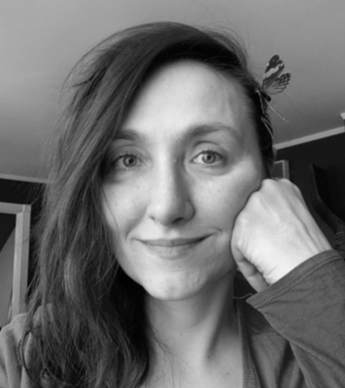
Dragana Rogulja, Armenise Harvard
Junior Faculty Grant Awardee 2021
Dragana Rogulja is Associate Professor of Neurobiology in the Department of Neurobiology at Harvard Medical School. Originally from Belgrade, Serbia, she earned her Ph.D. at Rutgers University and then did a postdoc at Rockefeller University.
In 2013, she established her own research group at Harvard Medical School, focusing on how sleep deprivation affects the body at the cellular and physiological level. She
has received numerous awards and honors, including the NIH Director’s New Innovator Award and the Pew Biomedical Scholar (both in 2016), and the Armenise Harvard Junior Faculty Grant (in 2021).
How did you come to study sleep?
My interest in sleep research started during my postdoc. It was a really interesting question because nobody had an explanation for why we need sleep for survival and health. When I had my own lab at Harvard, I started studying the effect of sleep on the physical body, the cells, and how they change in response to sleep loss.
What was sleep research saying back then?
Historically, sleep research has mostly focused on the brain—there’s even this saying that sleep is “of the brain, by the brain, for the brain.” But sleep originated in very early animals that didn’t even have brains. Animals with simple nerve nets, like Hydra or jellyfish, still enter sleep-like states every day.
Was focusing only on the brain limiting the field?
Definitely. A lot of studies focus on memory or synaptic processes, and sleep is certainly important for those things. But they can’t be the primary reason for sleep. Not being able to form memories won’t kill you in a few days. There must be something more basic, related to physiology and metabolism. So we assumed sleep doesn’t have to be about the brain, and we decided to look elsewhere.
Can you walk us through the key milestones of your research?
We started with fruit flies. First, we showed that sleep deprivation shortens survival. Then we could reproduce when flies start dying, depending on the level of deprivation. From there, we worked backwards and examined tissues to see where damage occurred. And we found that free radicals accumulate in the gut. There was a clear correlation between gut damage and survival. On the other hand, by using antioxidants in the gut, animals survive sleep deprivation, and their lifespan is completely normal. We think all this has to do with nutrient absorption. When animals don’t sleep, we see fat accumulating in the intestine—it doesn’t properly enter circulation. We think this is because nutrients are not properly processed, and the intestine traps them, leading to the generation of free radicals.
What does this imply about the function of sleep?
We think sleep is required for basic physiological processes like digestion. Wakefulness resembles a “fight or flight” state—you’re alert, responding to stimuli, looking for resources, and digestion is deprioritized. Sleep, instead, is a “rest and digest” state — circulation changes, muscles relax, and you’re not responding to the environment.
You also studied how diet influences sleep. What did you find?
We found that dietary proteins can activate cells in the gut, which then release signals to the brain that increase the arousal threshold. Basically, when an animal is well-fed, it can afford to sleep more deeply—it doesn’t need to respond to food cues. So eating and sleeping are tightly co-regulated.
What do you consider impactful research?
It’s something that has relevance to the real world — that affects people. There are many indications that the mechanisms are similar in flies, mice, and humans. And many human diseases—like colon inflammation and cancer—are linked to poor sleep. We hope that this work could eventually lead to therapies. For example, finding ways to measure oxidation in the human gut indirectly would be one step towards clinical applications.
How did the Armenise Harvard Foundation grant impact your work?
It definitely helped us move things forward. Research is really about resources: We have many ideas, but funding determines how much we can actually do.

