
Creating an Ecosystem for Discovery – Interview with HMS Dean George Daley.
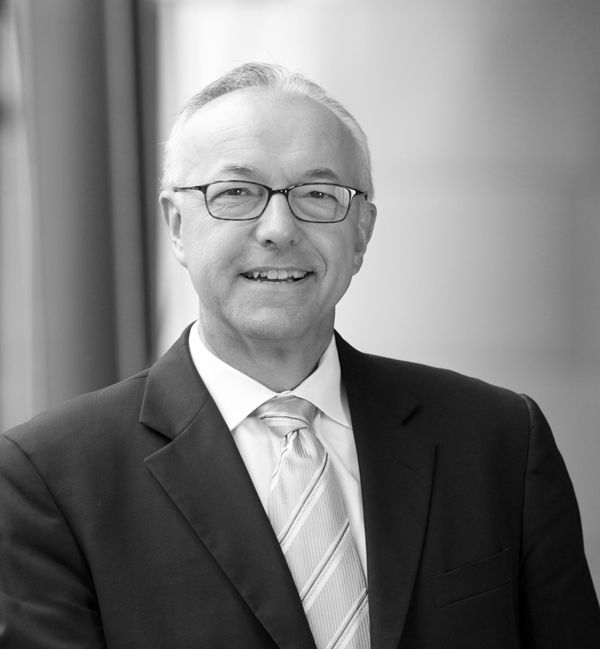
George Q. Daley, Dean of HMS and Foundation President
George Q. Daley is Dean of Harvard Medical School, the Caroline Shields Walker Professor of Medicine, and a leading expert in stem cell biology, regenerative medicine, and blood disorders.
His research has made fundamental contributions to our understanding of stem cells and cancer and has advanced the development of cell-based therapies for genetic and malignant diseases. He is President and Chief Executive Officer of the Giovanni Armenise Harvard Foundation.
How do you value the exchanges between Harvard Medical School and Italy through the Giovanni Armenise Harvard Foundation?
What impresses me when I come to these meetings of the Armenise Harvard Foundation, is the many brilliant scientists here in Italy. Wherever I travel around the world, I meet brilliant scientists. I have had wonderful experiences with several postdoctoral fellows from Italy who’ve come to Harvard and MIT to train. Some have stayed, and some have returned to Italy.
Through the Armenise Harvard Foundation, I’ve also had several university level interns, again, who’ve come for the summer, really immersed themselves in their scientific research, and some have stayed, and some have returned. So I think it’s been mutually beneficial for both the Harvard Community and Italian science to have this wonderful Foundation.
How do you think Harvard and the Boston area could inspire other places, like Italy, to be more attractive for scientists?
Boston as a biomedical community has emerged as a very dynamic ecosystem, but one that has taken many, many decades, to fully form. We have outstanding universities led by Harvard and MIT, together with a rich environment of young, intellectually engaged scholars.
We also have outstanding academic hospitals that promote the connection between laboratory science and clinical medicine. Equally important is predictable and generous governmental funding to support basic research, although that has come under some pressure recently.
There’s also a very dynamic community of investors interested in placing capital at risk to develop new technologies and bring them forward through industry as new products, including medical technologies. We also have extraordinary industrial partnerships. Most of the major pharmaceutical companies now have research centers in Boston or the surrounding area, alongside hundreds of startup companies. So, across the spectrum, we have educational institutions, academic medical institutions, governmental research support, industry partnerships, and together they generate a tremendous amount of biomedical innovation.
Resources are key, there’s no doubt. When I speak to Italian colleagues, they are enthusiastic about their own communities, colleagues, and opportunities, but they’re concerned about the lack of predictable, consistent governmental support for science.
There’s a huge attention on AI and the answers it is providing in science too. What role do you foresee for AI in the future of science?
Well, artificial intelligence is clearly an emerging revolution in science. My own laboratory has been using artificial intelligence strategies and machine learning approaches to interrogate biology for the better part of twenty years. Yet there’s never been a time as exciting as the last few years with the introduction of large language models and generative AI.
There’s no doubt that AI is a remarkably enabling technology, not only for performing literature reviews and testing, but now even for generating novel scientific hypotheses. We anticipate that, in the next couple of years, AI agents will become increasingly connected to self-driving robotic laboratories. When that end-to-end science is fully integrated, the pace of innovation and discovery is going to become much, much more rapid. That does not mean humans will no longer be essential. I think they absolutely will be. We’re still learning how to use AI, but I believe the partnership between human intelligence and artificial intelligence will remain fundamental.
[This interview was recorded by Roberta Fulci (Radio3Scienza, RAI – Radio3)]

