Relevant science changes paradigms. Interview withGalit Lahav.
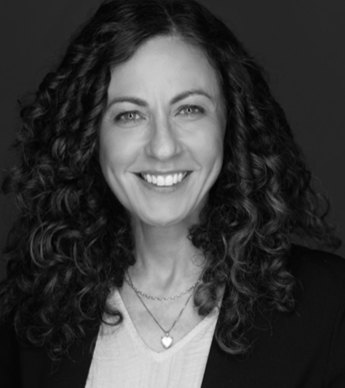
Galit Lahav, Armenise Harvard Junior
Faculty Grant Awardee 2006
Galit Lahav is Professor of Systems Biology and Chair of the Department of Systems Biology at Harvard Medical School. After graduating in Israel, she moved to Harvard in 2004 and was awarded the Armenise Harvard Junior Faculty Grant in 2006.
Galit has been recognized through several awards and honors, including the Smith Family Award, Vilcek Prize for Creative Promise, and Excellence in Teaching and Mentoring awards.
She is highly committed to furthering the advancement of women in science. She is also a member of the GAHF Scientific Advisory Board.
What is your research about?
We study how cancer cells respond to treatment that triggers DNA damage, such as radiation or chemotherapy. We look at the single-cell resolution, focusing mainly on the tumor suppressor protein p53, the so-called “guardian of the genome”, to understand how it regulates cell fate. By fusing different fluorescent proteins to the p53 protein and then using quantitative live cell imaging, we can follow the behavior of p53 in response to different cancer treatments.
What inspired you to become a scientist?
My strong interest in science stemmed from high school, thanks to my biology teacher. It was in the 80s, when AIDS was revealed, and, instead of teaching us biology from textbooks, she brought scientific papers about HIV into the classroom. I just found it fascinating that I was learning about discoveries that were made the previous month!
Almost 20 years later, you started making discoveries yourself. Looking back, what are the results that you are particularly proud of?
In the past, scientists thought that little p53 means that the cell will recover, while a lot of p53 means the cell will die. Yet, it’s not that simple. In a 2004 study, when I was a postdoc, we showed that p53 levels oscillate in response to irradiation and that the number of oscillations depends on the amount of DNA damage. Later on, we saw that oscillations delay the cell’s decision to die or to senesce and are associated with recovery; hence, p53’s signaling dynamics determine whether a cell will live or will die, and not its absolute levels. In another study, we showed that cell fate depends on the rate at which p53 is induced; if the rate was very slow, the cell would survive; if the rate was very fast, the cell would die, even with low levels of p53. Recently, we have been working on understanding how different factors impact p53 dynamics. For example, a 2025 paper shows that cellular confluency also affects them.
Would you consider your results relevant, and how would you define “success” in basic research?
Successful basic research is when you really change a paradigm, right? When you bring something that is not just unique or true for one case, but is general across many fields. Our discovery that cellular information is transferred through dynamics is something like that. Our studies these past 20 years have inspired many other labs across the world to look at the temporal pattern of other signaling molecules.
Is diversity an ingredient to attain relevant research?
Science is very, very complex. And to solve complex problems, you need to bring people who look at the problem from different angles and backgrounds and combine these forces to solve it. But then you need to know how to lead a lab and people from various backgrounds, and nobody teaches you that, right? That’s why, for several years, I served as the faculty liaison for faculty development and have helped organize leadership and management workshops for junior faculty at Harvard.
Talking about ingredients, how did the Armenise Harvard Junior Faculty Grant help you in your career?
It was one of the first grants I received as a junior faculty, so it was huge. First of all, it gave me funding to do more creative research. But it also had a psychological and emotional impact in showing me that I can succeed, even in a very competitive, highlevel environment. And during this last year of crisis at Harvard, the Foundation hasbeen extremely instrumental in supporting our new junior faculty.

