
Beyond Recruitment: Mentoring the Next Generation – Interview with ISAC Chairman Marino Zerial.
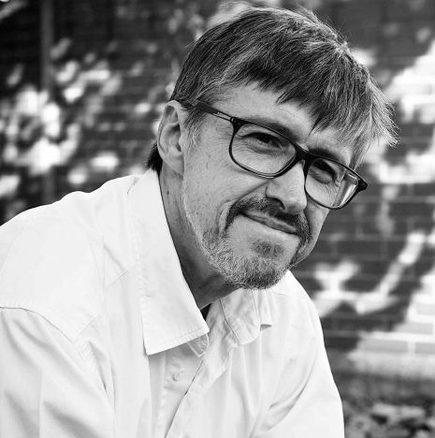
Marino Zerial, Chair of the Italian Scholarship Advisory Committee of the Foundation
Marino Zerial is co-founder and former
director of the Max Planck Institute of
Molecular Cell Biology and Genetics (MPI-CBG) in Dresden, Germany, and Director of the Human Technopole in Milan, Italy. He also serves as Chair of the Italian Scholarship Advisory Committee of the Giovanni Armenise Harvard Foundation. His pioneering research on endocytosis and intracellular membrane trafficking has earned him numerous international honors, including the Gottfried Wilhelm Leibniz Prize (2006).
Nowadays, the Foundation receives many applications for the CDA program every year. But how was the recruitment like in the early years of the Foundation?
At the beginning we were much less well known. It was also more difficult to find host institutions able to provide the necessary research infrastructure. But Italy has changed over the years. Research institutes gradually adapted because they realized they could attract outstanding scientists, and they began making a real effort to provide them with an environment where they could thrive. Eventually, institutions even started competing with one another to recruit the best talents.
The Foundation’s selection process, built on transparency and fairness. How did you achieve that, and how has it evolved over time?
We have always tried to adopt international standards. One of our main points of reference in building the Italian Scholarship Advisory Committee (ISAC) has been the European Research Council (ERC). And one of the most important developments has been our strong commitment to gender balance — not only among applicants, but especially within the ISAC committee itself.
At the same time, we have paid close attention to ensuring broad scientific expertise. As science becomes increasingly interdisciplinary, the committee must reflect that. Over time, we succeeded in building a panel composed of highly interdisciplinary scientists who were able to appreciate excellent science even beyond their own areas of expertise and engage candidates in meaningful scientific discussions.
Another important decision was to limit the number of reviewers based in Italy to just two out of eleven. Why so?
If there were too many reviewers from Italy, conflicts of interest would obviously be more frequent: In our experience, reviewers often knew the candidates personally, or their own institutions might have had an interest in recruiting them. For this reason, we adopted a strict zero-tolerance policy. If a committee member had a conflict of interest with a candidate, they were permitted to attend the candidate’s presentation, but they had to leave the room before the discussion and evaluation began.
Looking ahead, do you think these approaches need any fine-tuning? How do you see the next ten years?
We need to strengthen mentoring to support our young Career Development Awardees once they join their host institutions. The lack of proper mentoring is a major cultural deficit in Italy compared to other countries. External mentors can certainly help, but researchers also need continuous mentoring within their own institution. Mentoring should be much more than an occasional conversation. It needs to be structured, with regular discussions about different strategies and jointly agreed objectives. Both mentor and mentee should leave each meeting with clear goals and concrete actions — from acquiring equipment to discussing the best strategy for publishing a paper, responding to reviewers, or preparing a competitive funding application.
Can a relatively small organization like the Foundation actually change the culture of a country — or at least of the institutions in which it operates?
Absolutely, especially when it comes to recruitment and the way talent is valued. That is precisely why institutes such as Airalzh and INF-ACT entrust us with selecting the candidates. Because they know we assess candidates on a set of defined meritocratic criteria, such as their past achievements, their vision and future plans,
and on the quality of the institution where they choose to develop their research.
And then, many CDAs have gone on to become scientific leaders at the universities and research institutes where they established their groups. This demonstrates that even a relatively modest grant, awarded for a limited period of time, can provide the momentum needed to launch a successful independent career and ultimately achieve long-term stability. It has also shown that Italy is capable of recognizing and retaining outstanding talent.
You spent many years in Germany. Based on that experience, what do you think Italy is still missing? What would you bring from the German system?
One of Germany’s greatest strengths is that it has a very clear and well-structured research ecosystem, with universities complemented by a network of non-university research organizations, such as the Max Planck Society, and the Helmholtz, Leibniz and Fraunhofer Institutes.
They are supported by long-term government programmes that provide stable organization and funding. That, in my view, is what Italy lacks most: long-termplanning and vision of a national strategy for research.
At the same time, I believe the Italian model of the IRCCSs is particularly interesting. These research hospitals, often working in partnership with private organizations, provide an excellent environment for translational and clinical research. Interestingly, the Human Technopole Foundation I am directing offers access to shared technological platforms, thus providing support to research institutes in Italy.
Do you think technology transfer will become a more important part of the Foundation’s mission, or will the focus remain on basic research?
In my opinion, the Foundation’s core mission should remain basic research. When you discover new biological mechanisms or ask fundamentally new scientific questions, there is still a great deal of research that needs to be done before those discoveries can become applications. That early phase then needs sustained support, time, and the freedom to develop.
There is also another, more fundamental reason. At the beginning we were much less well known. It was also more difficult to find host institutions able to provide the necessary research infrastructure. But Italy has changed over the years. Research institutes gradually adapted because they realized they could attract outstanding scientists, and they began making a real effort to provide them with an environment where they could thrive. Eventually, institutions even started competing with one another to recruit the best talents.When you do basic research, you simply do not know where the next breakthrough will come from — unless you deliberately start with a translational objective. Take CRISPR-Cas genome editing or PCR. Both originated from fundamental studies of bacteria. No one set out to invent them. These discoveries happened because scientists were free to explore fundamental questions. And this is exactly a defining characteristic of the Foundation.

