
Mapping the blueprint of brain circuits. Interview with Federico Rossi.
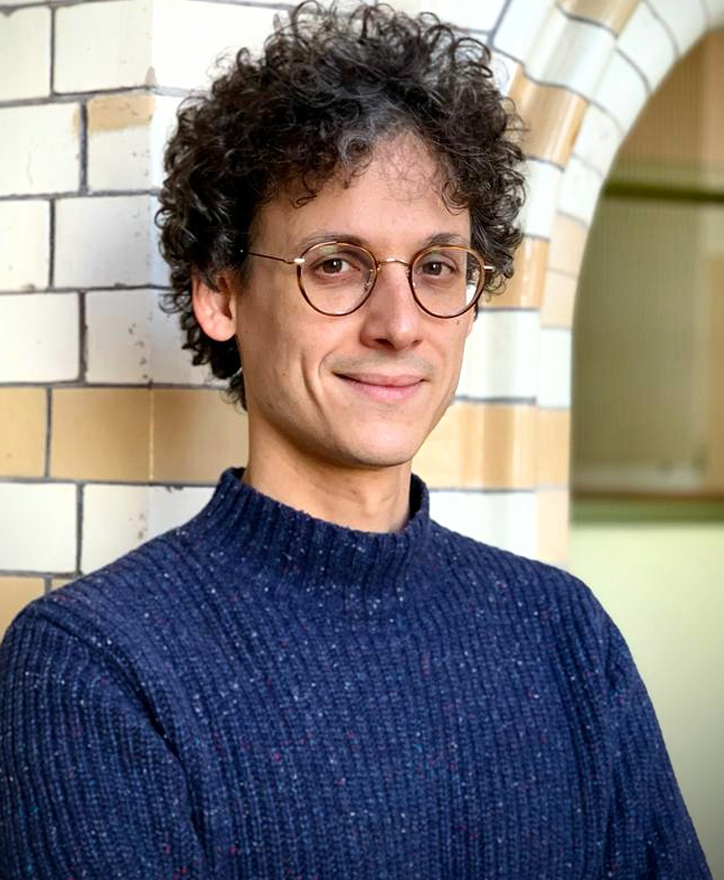
Federico Rossi, Armenise Harvard Career
Development Awardee 2023
Since 2023, Federico Rossi has been head of the Functional Architecture of Neural Circuits laboratory at the Italian Institute of Technology – Center for Neuroscience and Cognitive Systems in Rovereto. His post is supported by the Giovanni Armenise Harvard Career Development Award and a Human Technopole Early Career Fellowship.
After graduating from the Scuola Normale Superiore in Pisa, Federico completed his PhD and postdoctoral training at University College London (UCL), where he specialized in
neurophysiology, neuroanatomy, and systems neuroscience. He was also a GAHF Summer Fellow in 2011 at Harvard Medical School in Boston.
What drives you to do research in neuroscience?
I am fascinated by the dynamic relationship between the structure and function of the nervous system. Every time we perceive, think, or move, it’s because a specific set of neurons becomes active by exchanging electrochemical signals through an intricate network of synapses. But how does the architecture of these synaptic connections determine which neurons are activated, thus shaping what we perceive or how we act? And how does this architecture change when we learn?
Your CDA project’s name is fascinating: “Circuit and synaptic logic of cortical visuo-motor integration”. Can you explain more?
The project focuses on motion perception and explores how the cerebral cortex integrates vision and movement. Consider what happens when reading this text: how
come that, even if the eyes move continuously from one word to another, no movement or image displacement is perceived? In cortical visual and motor areas, we map the synaptic connections that generate specific patterns of neural activity – patterns that, as neuroscientists say, “encode” images of different shapes or motion directions, or movement in different directions. We do this in animals engaged in tasks requiring them to detect and respond to sensory stimuli, and we examine how these patterns change depending on the animal’s movements.
And how do you look for the blueprint of the brain circuits?
We use advanced imaging techniques to visualize and measure both the activity and the connections of neurons in the brain as they process sensory and motor inputs. We then interpret how these inputs and outputs are encoded in the neural activity, and how the connections determine which neurons are engaged. Our approach also allows us to selectively activate or silence specific sets of neurons to reveal their roles in circuit function and perception.
You study all this by focusing on the visual pathway, why?
It’s an ideal model for understanding how the brain processes external information and coordinates sensory input with motor output. That’s because we can precisely control what the eyes see – both spatially and temporally – while measuring neural responses at different stages along the pathway. This lets us to quantitatively relate sensory events to brain activity.
What are the challenges of your research?
One of the biggest challenges is recording from connected networks of neurons in vivo, and doing so repeatedly over time to study learning and plasticity – a dream
experiment for generations of neuroscientists. To give you a sense of the scale: a neuron is about 10 microns wide (one-tenth the width of a human hair), and synapticconnections are less than 1 micron across. To tackle this, we’re developing new strategies to record neural activity and anatomy in the live brain at much higher
resolution than before.
Can you give us an example?
In a recent paper, we contributed to the development of a new engineered protein, iGluSnFR4, which fluoresces whenever a synapse on a neuron is activated. Combined with our advanced two-photon microscopy, this tool allows us to record the beautiful structure of individual neurons and the activity of hundreds of their input connections: They look like trees, with thousands of synapses that blink when active. With this tool, we can now study how neurons interpret incoming signals – and how
the plasticity of these connections underpins learning.
What is the impact of your research on the scientific community and society at large?
Understanding how the brain is wired and how it functions is one of the biggest scientific challenges of our century. We aim to uncover general principles – blueprints – that can apply to other sensory systems as well. These principles could also help improve current AI models, which still lag behind biological brains in energy efficiency
and flexibility. In addition, our discoveries may shed light on what goes wrong in brain disorders, many of which still have no cure. Conditions like epilepsy, schizophrenia, and autism are thought to arise from abnormal activity in specific pathways or disrupted connectivity.

