
Sloan Devlin, 2025
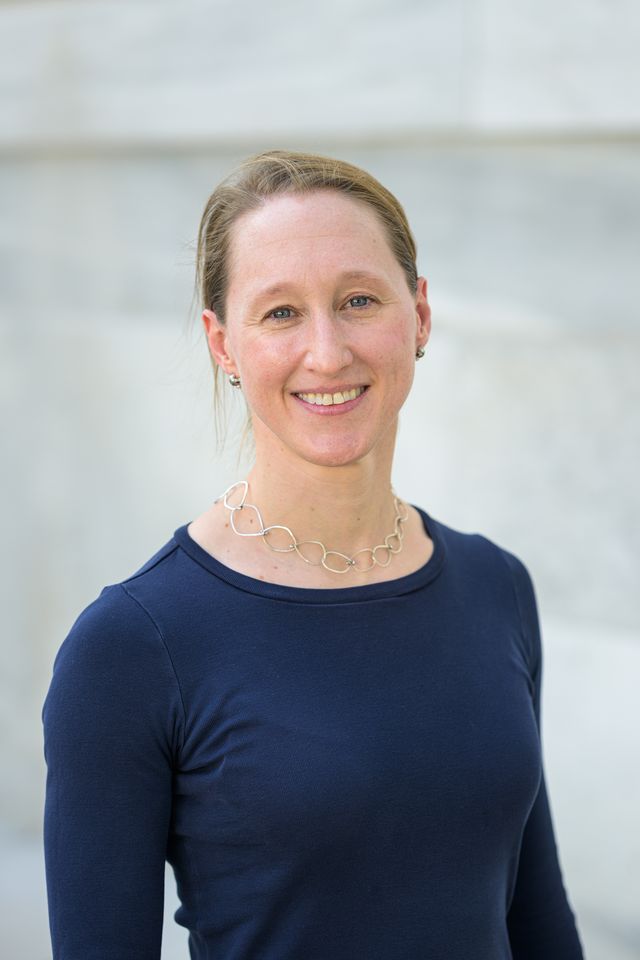
Who she is
Sloan Devlin is currently an Associate Professor in the Department of Biological Chemistry and Molecular Pharmacology (BCMP) at Harvard Medical School. She received her A.B. degree in chemistry from Harvard College in 2006, where she conducted organic chemistry research in the laboratory of Andrew Myers. She earned her Ph.D. in 2012 from Stanford University under the direction of Justin Du Bois, where she performed research in total synthesis and organometallic methodology development. As a postdoc with Michael Fischbach at the University of California, San Francisco, she elucidated biosynthetic pathways and biological activities for small molecules produced by human gut bacteria. Sloan joined the Department of BCMP as an Assistant Professor in Fall 2016.
What she does
The long-term goal of the Devlin lab is to understand and control the chemistry of human-associated bacteria in order to uncover how these bacterial guests affect the human host.
The human microbiome plays a vital role in health and disease. Microbial imbalance has been linked to a wide range of disease states, including inflammatory bowel diseases, cancer, autism, and obesity. However, the ways in which commensal bacteria interact with and affect the human host at a molecular level are poorly understood. One of the most concrete ways that the microbiome affects the host is through the production of small molecule metabolites, some of which accumulate in the body to levels higher than that of a typical drug. We are utilizing strategies and techniques from synthetic organic chemistry, molecular biology, microbiology, analytical chemistry, bioinformatics, and gnotobiotic mouse experimental design to 1) elucidate the biosynthetic pathways and biological functions of small molecules produced by the human microbiome and 2) design, synthesize, and utilize small molecules to probe and manipulate human-associated bacteria in vivo.
News from the Lab
A major research focus of my lab has been investigating how human gut bacteria metabolize host-produced small molecules and how the resultant compounds affect host physiology. In particular, my lab has investigated how microbial metabolites affect host metabolism, immune function, and more recently, neurological function and behavior. Host-produced compounds such as steroids and vitamins act as crucial signaling molecules and regulators of host biology, but their metabolism by gut bacteria has been relatively unexplored. We have uncovered the biosynthetic pathways and biological roles of host-produced, bacterially modified metabolites.
In recent and ongoing work, my lab has broadened the scope of molecules we study to include diet-derived compounds, a major source of molecular complexity in the gut. As a springboard for these studies, my lab has developed untargeted and semi-targeted metabolomics strategies that are currently allowing us to identify novel compounds in complex biological samples. Looking forward, my lab will continue to use a chemistry-guided, rigorous, mechanistic approach to study the microbiome.

