
Stefano Gustincich, 2003
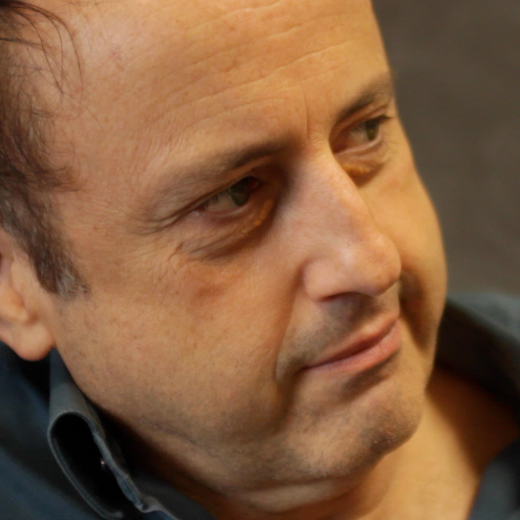
Career Development Award Project Title
“Functional genomics of neural networks”, 2003
Who he is
Stefano Gustincich is a molecular biologist whose specialty is in the genomics of the nervous system. He received his BSc in biology in Trieste and his doctorate from the International School for Advanced Studies (SISSA). His story is a textbook case of how grants from the Armenise Harvard Foundation can allow an Italian researcher to literally “bring back home” skills and scientific experience gained in the best laboratories around the world. After his PhD he spent ten years of research abroad, working for a long period at the Harvard Medical School in the laboratory of Elio Raviola where he specialized in genomics and cutting-edge molecular biology. In 2003, thanks to the Career Development Award he established a laboratory of neurogenomics at SISSA in his hometown Trieste, where he later become full professor in Applied Biology.
In 2015 he joined IIT, Genova, where he led the Lifetech Research Domain (2016-2022) and the Department of Neuroscience and Brain Technologies (2015-2020). He also founded a new RNA Technology Center at IIT within the Center for Human Technologies, Erzelli, Genova. This led to the establishment of the “RNA Initiative”, now RNA Flagship.
He is the Scientific Director of a recently established IIT Center for Clinical and Computational Genomics (C3G) in Aosta. One of its aims, the whole genome sequencing of 5000 individuals, has been completed in November 2024. He is also coordinating a joint laboratory with the Children Hospital Gaslini, Genova providing the sequencing and computational infrastructure to carry out genomic-based diagnostics.
Stefano is currently the leader of the Spoke 3 for Neurodegeneration of the National Center of Gene Therapy and RNA-based drugs (PNRR).
What he does
Gustincich’s Lab interests concern the biology of the non-coding portion of the genome, the so-called “Junk DNA”. His laboratory discovered the SINEUPs, a new functional class of antisense long noncoding RNAs able to increase translation of their sense gene. For their economic exploitation in gene therapy of haploinsufficiency diseases, Stefano co-founded SINERISE Therapeutics.
To study the mammalian transcriptome, he has been part of the FANTOM project, a joint international effort led by the Japanese research institution RIKEN. Furthermore, he coordinated a large international consortium (Dopaminet) focused on the molecular networks of dopaminergic neurons. In this context his laboratory discovered the expression of hemoglobin in the brain. More recently, his lab has been interested in the study of the role of Transposable elements in corticogenesis and in the adult brain and their dys-regulation in neurodevelopmental disorders and neurodegenerative diseases.
News from the Lab
Recently, SINEUPs have been identified as Internal Ribosome Entry Site (IRES)-containing sequences that act in trans through an antisense interaction with target mRNAs. Several active synthetic SINEUPs have been validated both in his laboratory and in multiple laboratories worldwide. He has also proposed a novel mechanism of action for LINE-1 repetitive elements functioning as long non-coding RNAs, demonstrating their fundamental role during nervous system development and in behavioral outcomes in adulthood. At C3G, he has completed the whole-genome sequencing of 1,500 individuals with Parkinson’s disease.
Since the beginning of my scientific career, Gustincich published (including papers in press) 181 peer-reviewed research articles and reviews with an average IF of 10.6, a h Index of 59 and more than 23000 citations (Google Scholar).

