
Tiziana Bonaldi, 2007
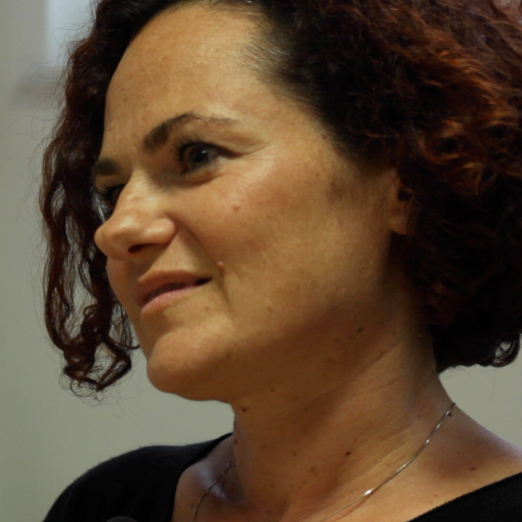
Career Development Award Project Title
“Deciphering the language of Histone Modification in the establishment of cell identity by Proteomics”, 2007
Who she is
Biochemist Tiziana Bonaldi works on nuclear proteomics at the European Institute of Oncology in the Department of Experimental Oncology. After a degree in molecular biology and a doctorate in biochemistry, she worked for six years in Germany, at the Adolf Butenandt Institute in Munich and at the Max Planck Institute of Biochemistry in Martinsried. She then returned to Italy in 2008 thanks to the Armenise Harvard Career Development Award. She is also Associate Professor at University of Milan.
What she does
Her work involves chromatin, a three-dimensional macro complex made of proteins and DNA that regulates gene expression. In particular, Bonaldi and her team study how the decoding of DNA contributes to cellular development and how this mechanism changes in the course of tumor progression.
They have a different methodology – based on DNA decoding – from the one adopted by most cancer centers in Italy, which has a genomic approach.
Bonaldi and her team instead focus on proteins. This approach is called proteomics: proteomics consists precisely in systematically identifying proteins, and it is considered post-genomic because it was developed after the completion of the genome project. However, genomics and proteomics are not conflicting but complementary. In fact, the transition from genes to proteins is much more complex than previously thought: the study of proteomics adds a perspective that had previously been ignored.
Bonaldi and her team are also trying to find the answers to basic biology questions with a highly technological approach. In fact, the tool used to carry out this research is mass spectrometry, an analytical technique borrowed from chemistry.
News from the Lab
Tiziana Bonaldi’s research lies at the forefront of cancer epigenetics and proteomics, with a focus on understanding how chromatin-based regulatory mechanisms are rewired in cancer. Her work is distinguished by a protein-centric perspective, leveraging advanced quantitative mass spectrometry (MS) to dissect the complexity of epigenetic regulation beyond the genome. By systematically characterizing histone and non-histone post-translational modifications (PTMs), her research reveals how dynamic chromatin states contribute to tumor progression, plasticity, and therapy resistance.
In a landscape largely dominated by genomics, Bonaldi has pioneered a complementary “post-genomic” approach based on proteomics, enabling the direct measurement of molecular effectors of gene regulation. Her laboratory develops and applies cutting-edge MS methodologies to map chromatin composition and modification patterns, including in clinically relevant primary samples. This work has provided key insights into the role of epigenetic enzymes and PTM networks in aggressive cancers such as triple-negative breast cancer.
Through the integration of technological innovation and biological discovery, her research continues to uncover novel mechanisms of cancer adaptation and identify potential epigenetic vulnerabilities for therapeutic intervention.

