
Gabriele Ciceri, 2025
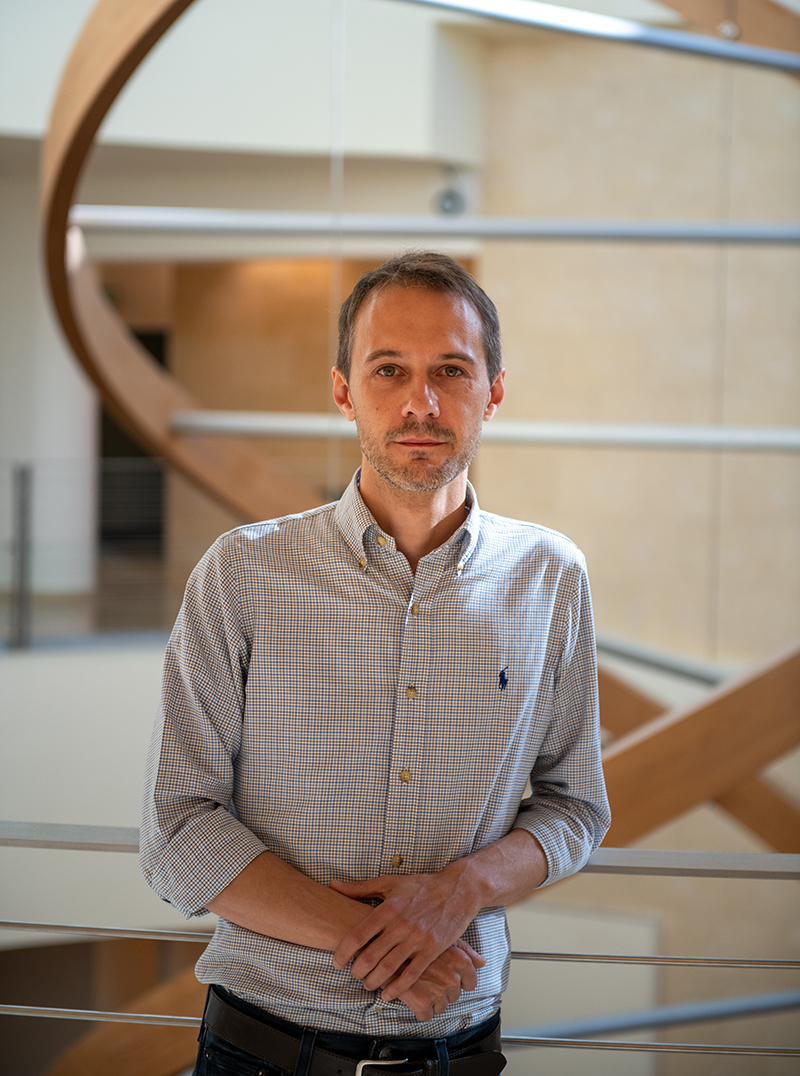
Career Development Award Project Title
“Directing the timing of maturation across human neural cell types”, 2025
Who he is
Gabriele Ciceri is a neurobiologist and stem cell biologist, Group Leader at the San Raffaele Telethon Institute for Gene Therapy (SR-Tiget) in Milan, Italy, where he leads the “Armenise-Harvard laboratory of Stem Cells and Timing of Neural Development in Health and disease”. Gabriele received his BS and MS in pharmaceutical biotechnology from the University of Milan and completed his MS thesis at San Raffaele Scientific Institute. He then joined the laboratory of Oscar Marín at the Neuroscience Institute CSIC-UMH, in Alicante, Spain, where he obtained his PhD in Neuroscience investigating how the diversity of nerve cells is generated in the mammalian brain in vivo. After his PhD studies, Gabriele moved to the United States to work with Lorenz Studer at Memorial Sloan Kettering Cancer Center (MSKCC) in New York. There, first as an EMBO and NYSTEM postdoctoral fellow and then as a Senior Research Scientist, he developed novel tools to direct the acquisition of cell identity and to model the emergence of human -enriched neural cell types from human pluripotent stem cells. Beyond directing cell fate, Gabriele’s research identified an epigenetic switch that instruct the protracted pace of maturation in hPSC-derived neurons. In 2025, Gabriele was awarded the Armenise Harvard Career Development Award and launched his laboratory at SR-Tiget.
What he does
Brain development is a highly dynamic process, in which a large diversity of cell types gets together in space and time. In humans, the construction of functional brain circuits can take years-to-decades in certain regions, while others reach maturity at a faster pace. Ciceri’s research program seeks to understand how the temporal information is encoded in the developing brain and is modulated across distinct types of human neurons and brain regions to instruct their coordinated assembly into mature functional circuits. The long-term vision of his research is to uncover how the pace of cellular maturation contributes to the emergence of the unique properties of the human brain, such as the increased number and diversity of cell types and the complexity and precision of neuronal networks. The new laboratory uses cutting-edge human pluripotent stem cells -based technologies to generate distinct types of human neurons in vitro at high precision and scale and combines genetic & cell engineering with cell transplantation assays, aiming at developing strategies to accelerate, delay or potentially revert the maturation process. This innovative experimental platform to manipulate neuronal maturity should unravel new mechanisms guiding the coordinated assembly of the brain cytoarchitecture and should enable the mechanistic interrogation of how alterations in maturation trajectories contribute to neurological disorders.

